| Design factor | Supported effect | Planning use |
|---|---|---|
| Baseline | A larger baseline improves depth precision at longer ranges. A smaller baseline performs better for close-range tasks such as robotics and industrial inspection. | Pick the baseline from the distance your robot works at, not from the biggest figure on a spec sheet. |
| Datasheet baselines | The MultiSense family spans 21 cm to 30 cm. The KS21i has a 21 cm baseline for indoor use only. The S30 has a 30 cm baseline for long range. | Match the camera variant to indoor or long-range duty before comparing other specs. |
| Resolution | Higher resolution gives more pixel detail for disparity measurement. | Spend on resolution when precise depth matters more than frame cost. |
| Scene texture and light | The system relies on visible texture, so it performs best with sufficient illumination and contrast. Active illumination helps in low light. | Check walls, floors and lighting on the robot’s route before committing to stereo alone. |
| Reflective surfaces | Specular reflections can make the algorithm misjudge the distance of a reflected object. | Treat glossy or mirror-like areas as places where depth may be wrong. |
| Calibration | Calibration stability is key, and many professional stereo cameras are factory-calibrated. | Ask whether a camera ships calibrated before planning your own calibration work. |
The effects above are drawn from the VA Imaging stereovision overview and the MultiSense stereo camera product page.
Stereo vision robotics gives a robot depth from two cameras separated by a fixed baseline. Accuracy at range depends on baseline and resolution, and the scene must offer visible texture and enough light for left and right images to be matched.
This page is a deeper look at one technique within robot vision systems. If you are weighing sensors more broadly, see how do robots measure depth for the wider comparison.
Where stereo works and where it breaks
Stereo vision fails wherever the matching step has nothing reliable to latch onto. The method relies on visible texture to identify correspondences, so scene content decides success as much as the hardware does. The camera maker behind MultiSense goes further and states that a scene can never have too much texture or detail for a stereo camera.
That explains why a blank wall defeats a stereo pair. A uniform surface looks the same at every horizontal offset, so no pixel in the left image can be tied to a particular pixel in the right image. The robot gets no usable disparity there, even though the wall is plainly in view.
- Plain walls and floors: expect gaps or noisy depth. If a route is mostly featureless corridor, stereo alone is a risky choice, and added illumination or another sensor deserves a place in the design.
- Repetitive patterns: these are named, together with textureless surfaces and occlusions, among the real-world challenges that advanced matching techniques are meant to handle.
- Occlusions: a point seen by only one camera has no counterpart to match, so depth near object edges is the first place to check.
- Dim scenes: the system performs best with sufficient illumination and contrast, and active illumination is the remedy for low light.
The practical rule is to survey the environment before choosing the sensor. Stereo suits cluttered, well-lit spaces with plenty of surface detail, and it is weakest where the surroundings are bare. The next decision, once stereo looks viable, is how far apart to put the cameras.
Choosing a baseline for your working range
The baseline is the fixed distance between the cameras, and it sets the range where depth stays precise. A larger baseline improves depth precision at longer ranges, which makes it the usual choice for outdoor navigation or vehicles. A smaller baseline performs better for close-range tasks such as gesture recognition, robotics or industrial inspection, according to VA Imaging.
The geometry explains the trade-off. Disparity is inversely proportional to the distance of an object, so distant objects produce small disparities. A given amount of matching imprecision therefore covers a wider band of possible depths far away than nearby. A longer baseline widens the disparity for the same distance, which is why it helps at range. Depth error grows as the object moves farther out, and the baseline is the main lever you control to slow that growth.
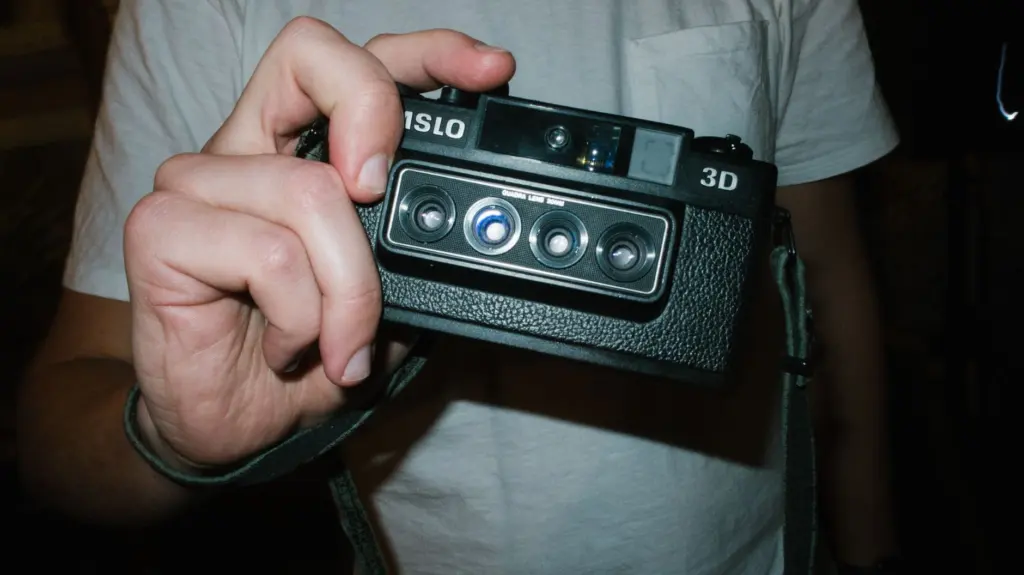
Datasheets show how manufacturers apply this. The MultiSense family lists baseline lengths from 21 cm to 30 cm. The KS21i, with a 21 cm baseline, is marked for indoor use only, while the 30 cm S30 is described as long range. A robot working among shelves and doorways suits the shorter unit. A platform that must judge distance straight ahead at greater range suits the longer one.
- Indoor mobile robots: a shorter baseline is the supported fit for close-range work, and it keeps the camera compact on the chassis.
- Long-range navigation: choose the wider baseline, accepting the larger body that comes with it.
- Mixed duty: a robot that crosses wide open spaces and tight aisles should be specified for its longest required range, then tested at close range.
Baseline is not the only lever. Higher resolution gives more pixel detail for disparity measurement, so a modest baseline paired with a higher-resolution sensor can recover some precision. Stereo cameras in warehouse robotics operate across a wide range of distances, as Vision Systems Design notes, which is why the range requirement should be written down before the camera is chosen.
How stereo vision works
Stereo vision works by comparing two views of the same scene taken from slightly different positions. The camera consists of two or more cameras mounted side by side and separated by a fixed baseline. Each pixel in one image corresponds to a slightly shifted pixel in the other. The horizontal difference between them is the disparity, and it is inversely proportional to the distance of the object from the camera.
Once the correspondences are found, depth follows. Using the known baseline and focal length, the camera calculates the depth of each point in the scene. MultiSense cameras describe the same idea as triangulation: matching an object in the left and right images determines how far it is from the camera. The per-pixel disparity result is called a disparity map, and it is the intermediate product from which depth is derived.
Why rectification matters
Searching a whole image for each match would be slow. Epipolar geometry narrows the problem, and a stereo thesis from the Anagram project treats it as a core part of the theory alongside camera calibration. After rectification, features in the left and right images are guaranteed to occur on the same row of the image. The matcher then only scans along a row, which simplifies disparity calculation.
Stereo matching algorithms
Stereo matching algorithms differ in how they decide which right-image pixel belongs to a left-image pixel. The simplest family compares image intensities, which the Anagram thesis covers as intensity-based correspondence analysis. That approach is a useful baseline for understanding the problem, but plain intensity comparison struggles on the difficult scenes described earlier.
More advanced pipelines add filtering and smoothing, then use stronger correspondence methods. VA Imaging names semi-global matching and deep-learning-based stereo networks as examples. These techniques handle textureless surfaces, repetitive patterns and occlusions, which are the failure cases that block simpler matchers.
- Semi-global matching: a good fit when you want a conventional, inspectable pipeline that copes better with weak texture than basic comparison.
- Deep-learning stereo networks: worth considering when scenes are messy and you can accept a learned model in the perception stack.
- Intensity-based comparison: best treated as a teaching baseline rather than the production choice.
Whatever the algorithm, it can only be as good as the images and alignment it receives, which brings the discussion to calibration.
Calibrating a stereo camera pair
Calibration and rectification prepare the two images so disparity can be calculated. Calibration determines each camera’s focal length, lens distortion and relative alignment. Rectification then adjusts the captured images so corresponding points lie along the same horizontal line. The Anagram thesis lists camera calibration as a foundational step before correspondence analysis.
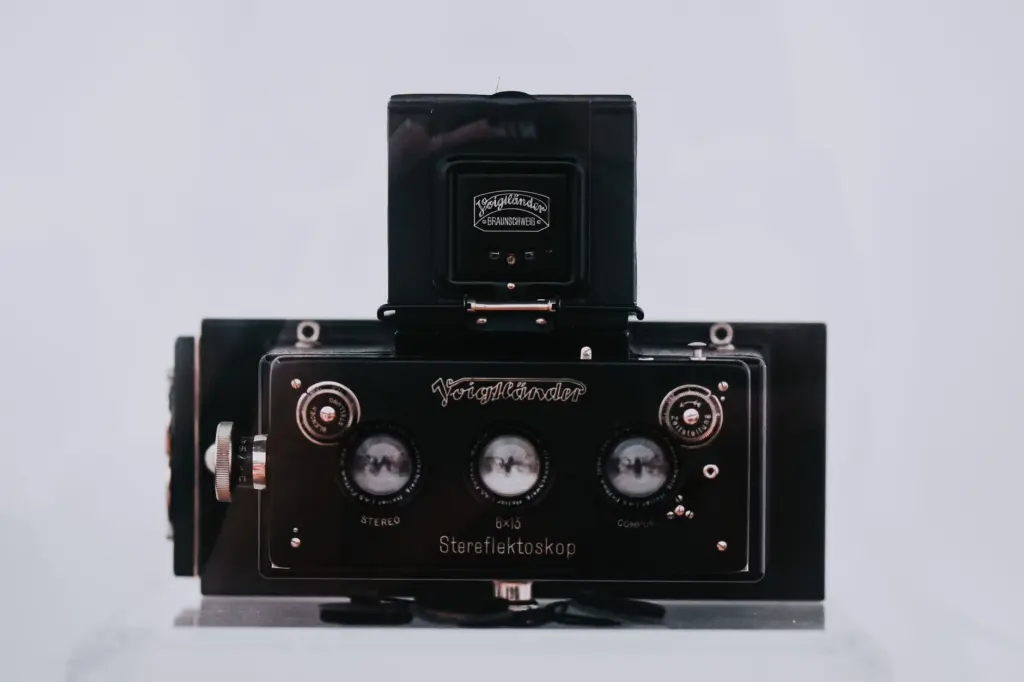
The practical question is whether you do this yourself. Calibration stability is key, and many professional stereo cameras come factory-calibrated, as VA Imaging notes. A factory-calibrated unit with a rigid mount saves effort. If you build a rig from two separate cameras, the alignment becomes your responsibility, and any change in how they are fixed to the robot undermines the calibration you ran.
Stereo or time of flight indoors
Stereo is not the only depth option for an indoor robot. One comparison of depth-sensing cameras in AMR applications says stereo vision is suitable for outdoor and long-range environments, while ToF is better for indoor and low-light conditions. That is a vendor view rather than a rule, but it matches the texture and illumination limits above. If your robot spends its time in dim, featureless interiors, time of flight camera robotics deserves a serious look before you commit to a stereo rig.
Frequently asked questions
Does higher resolution improve stereo depth?
Yes, within limits set by the rest of the design. Higher resolution provides more pixel detail for disparity measurement, which allows more precise depth calculations.
Why can shiny surfaces give wrong distances?
Specular reflections break the assumption that each point is lit directly. The algorithm may then misjudge the distance of a reflected object, so glossy areas are worth checking in testing.
Does point cloud quality matter for warehouse robots?
Yes. In warehouse applications the robot will not perform robustly without a high-quality 3D point cloud, so depth quality should be validated on real shelves and aisles.
Can stereo cope with low light?
It can with help. Stereo performs best with sufficient illumination and contrast, and active illumination is the supported way to extend it into low light.