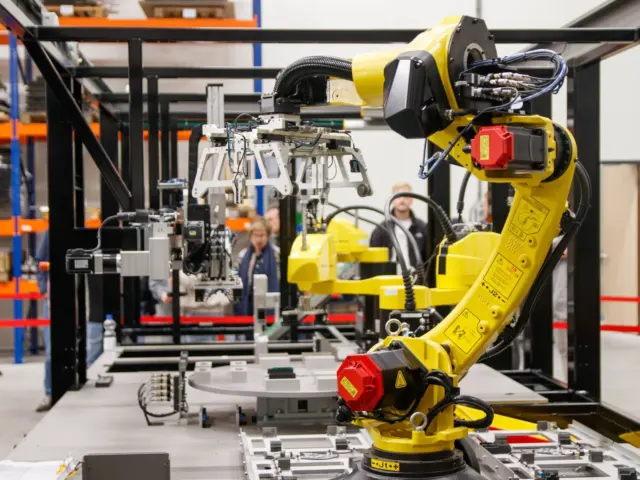
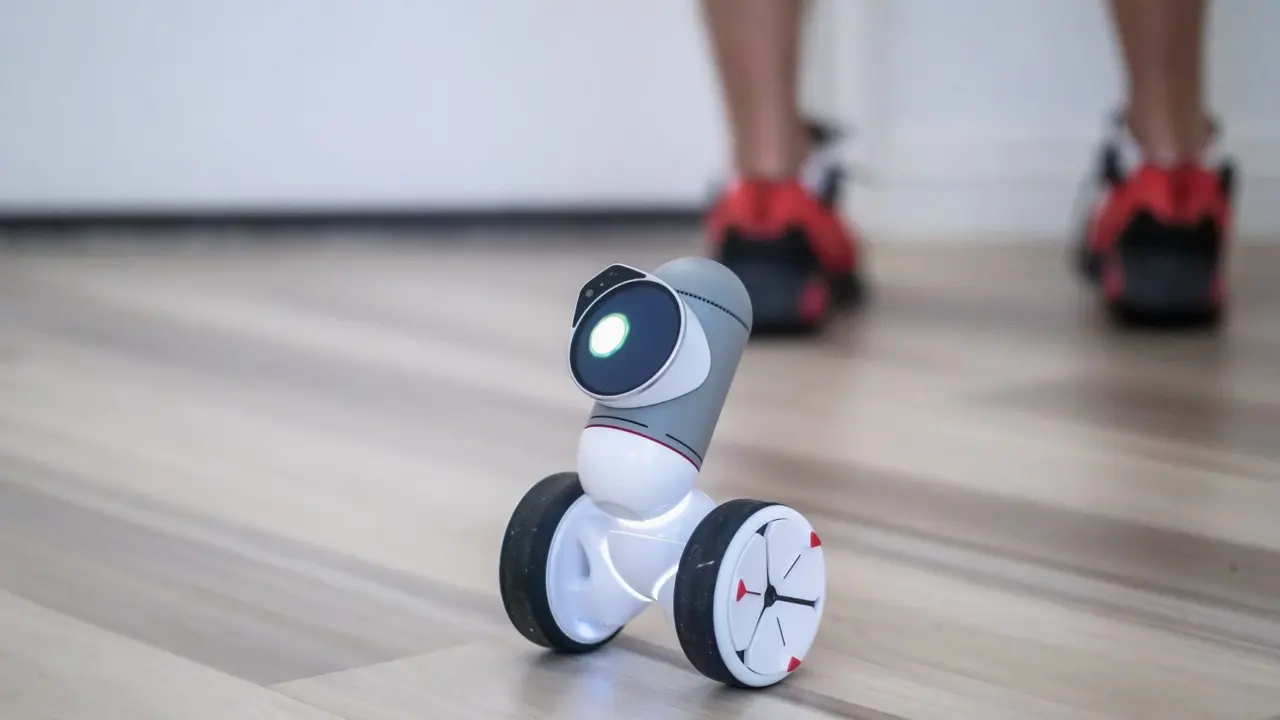
How do robots make decisions? They repeat a loop of sensing, choosing an action and acting. The method behind the choice depends on the setting: fixed rules for predictable tasks, scored search for open-ended ones, learned behaviour where rules fall short.
This overview sorts those approaches by when each fits. It is an entry point to the wider field of artificial intelligence in robotics, and later sections point to deeper guides on specific planning methods.
The decision loop: sense, plan, act
The sense-plan-act cycle is the frame that nearly every robot decision fits into. The robot gathers data, works out what to do, does it, and then starts again with fresh data. Because the loop never really ends, a robot’s “decision” is better pictured as a stream of small choices than a single moment of judgement.
- Sense. Real-time decision-making relies on a combination of sensors, algorithms and processing units. The sensors gather the data that everything downstream depends on.
- Plan. In Caltech’s description of its SETS algorithm, the system simulates thousands to tens of thousands of possible trajectories and then selects the best one.
- Act. The robot carries out the selected trajectory, and the cycle begins again. The same Caltech account says the loop continues over and over, giving the robotic system the ability to make many decisions each second.
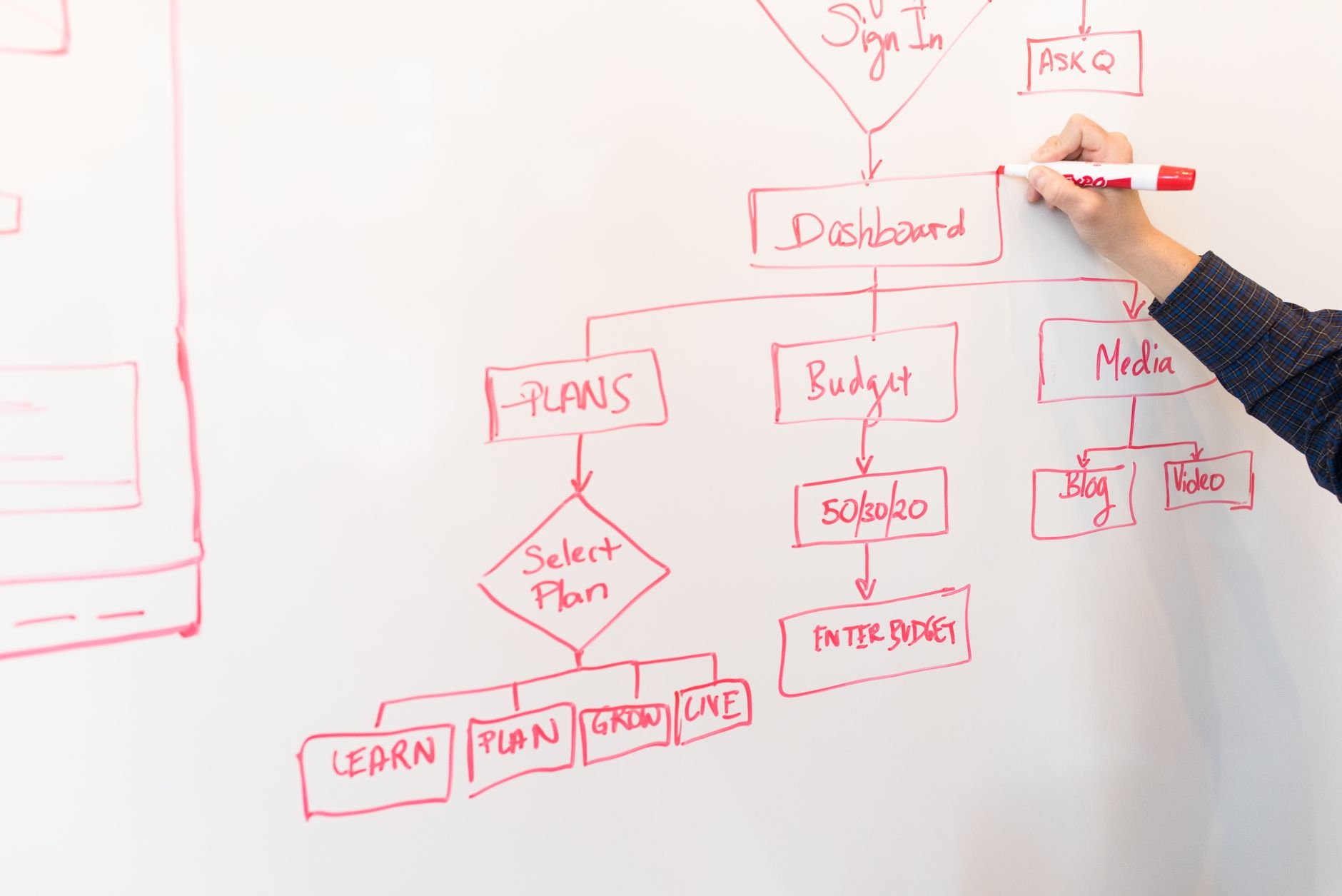
The practical lesson is that the loop’s quality depends on both ends. Poor sensing corrupts the plan, and a slow plan makes the action stale. That is why the next section deals with imperfect information.
Deciding under uncertainty
A robot decides under uncertainty by treating what it senses as evidence rather than fact. A survey of AI in robotics describes robots that use sensor data, computer vision and probabilistic reasoning to understand their environment. Readings are imperfect, so the sensor noise in each one is a reason to reason in probabilities instead of trusting a single value.
Choosing among imagined futures
One way to handle uncertainty is to imagine many futures and compare them. In the Caltech work, the system selects the option that offers the best outcome based on a point valuation. That valuation is what engineers call a utility function: a score that turns each possible outcome into a number so options can be ranked.
Why the search must stay small
Looking ahead has a cost. For continuous robot motion, the Caltech researchers note that the total number of trajectories in the search tree grows exponentially, so a robot cannot simply check everything. Their algorithm balances exploration of new paths against exploitation of high-reward ones, which lets it converge quickly on a good solution. In practice this is a trade between thinking longer and acting in time, and real-time settings are those where decisions need to happen quickly.
For a closely related technique that plans over a short look-ahead and re-plans as new data arrives, see model predictive control robotics.
Choosing an approach: rules, scored choice or learning
No single method suits every robot. A useful way to sort them is by how predictable the situation is and how much the robot must handle that nobody anticipated.
Rule-based control and state machines
Rule-based control suits tasks whose conditions can be listed in advance. State machines, or finite state automata, are a common approach to real-time decisions. Each state ties conditions to discrete actions, such as move forward, turn left or stop. The appeal is that behaviour is easy to inspect and test.
The weakness is brittleness. The PMC survey notes that robots with inflexible programming face challenges when confronted with unforeseen circumstances. Choose rules when the environment is controlled, and expect to add structure as behaviours multiply. A flat state machine can get tangled as it grows, and behavior trees robotics covers a way of organising such behaviours.
Utility-based choice and search
Scored choice suits situations where the best action depends on circumstances and cannot be tabulated. The robot generates candidate actions, scores their outcomes with a utility function and picks the highest. The Caltech researchers also point out that you do not want a designer to have to handcraft the candidate motions. Pick this approach when options are numerous and the goal can be expressed as a score.
Learned decisions
Learned decisions suit messy, perception-heavy settings. Traditional robots followed predetermined rules, while robots with machine learning can detect their environment and choose smart actions on their own. The trade-off is transparency: a learned choice is harder to trace back to a single rule, which matters in the safety section below.
Examples of autonomous robot decisions
Real systems usually combine these approaches rather than picking one. The examples below show where each shows up.
Household floors
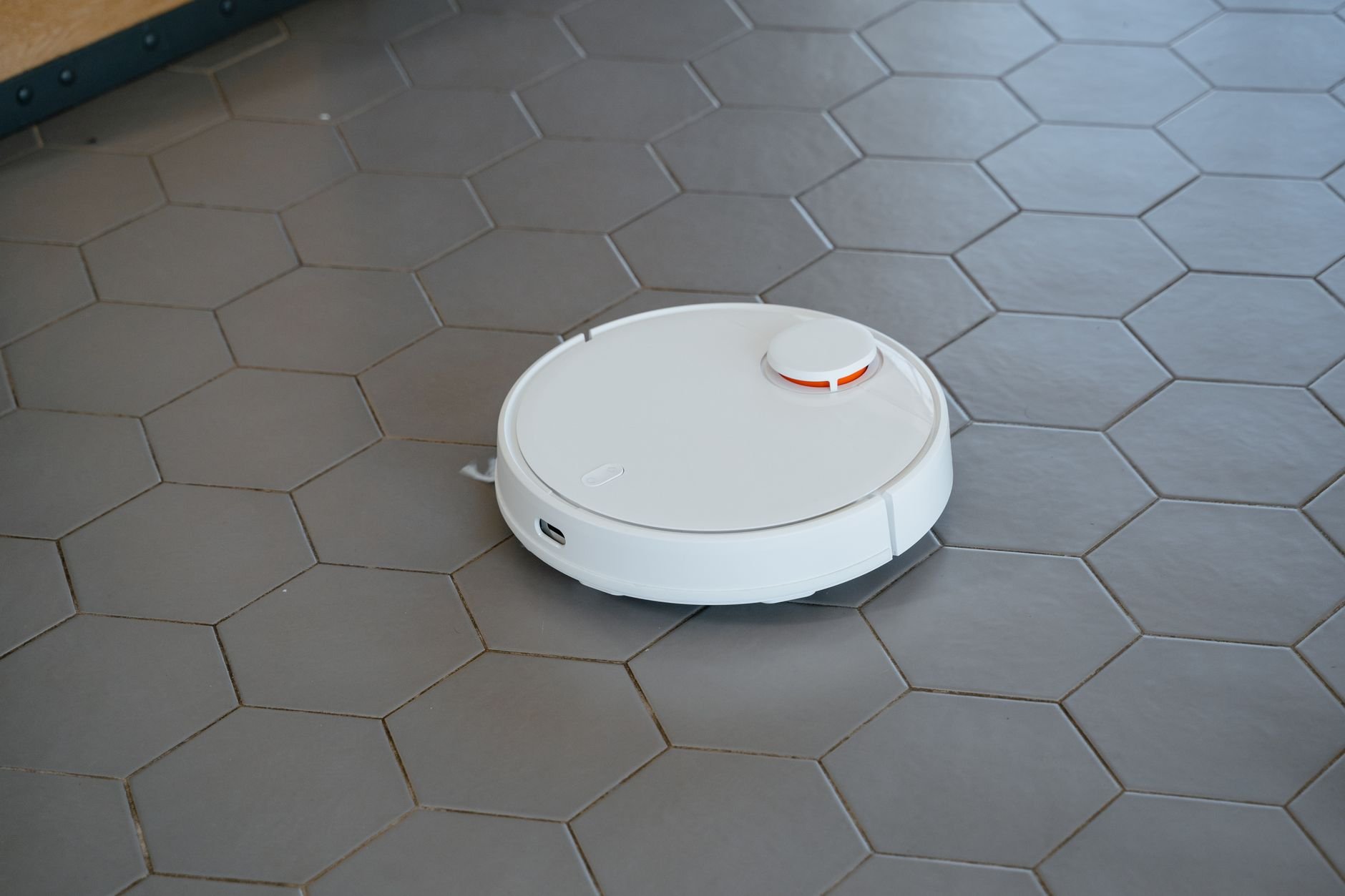
A floor-cleaning robot shows rule-based logic at household scale. Under the state-machine pattern above, a condition such as an obstacle ahead can map to an action such as turning or stopping.
Warehouses
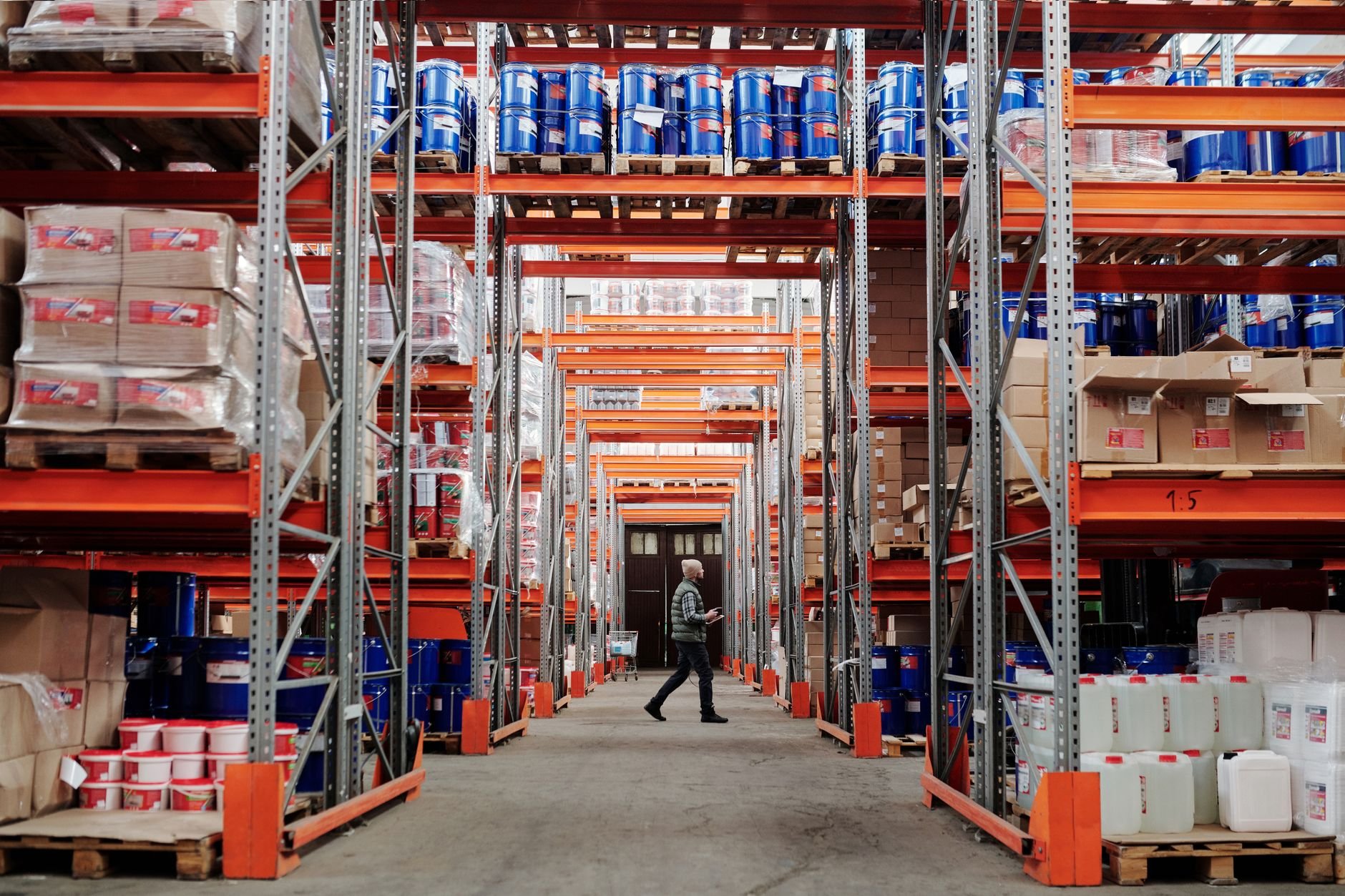
Warehouse robots show learning layered over routine work. According to Automate, they use previous movement data to improve their picking and respond to different inventory amounts. Shared aisles with people are where a robot’s choices about stopping and proceeding matter most.
Roads and sidewalks
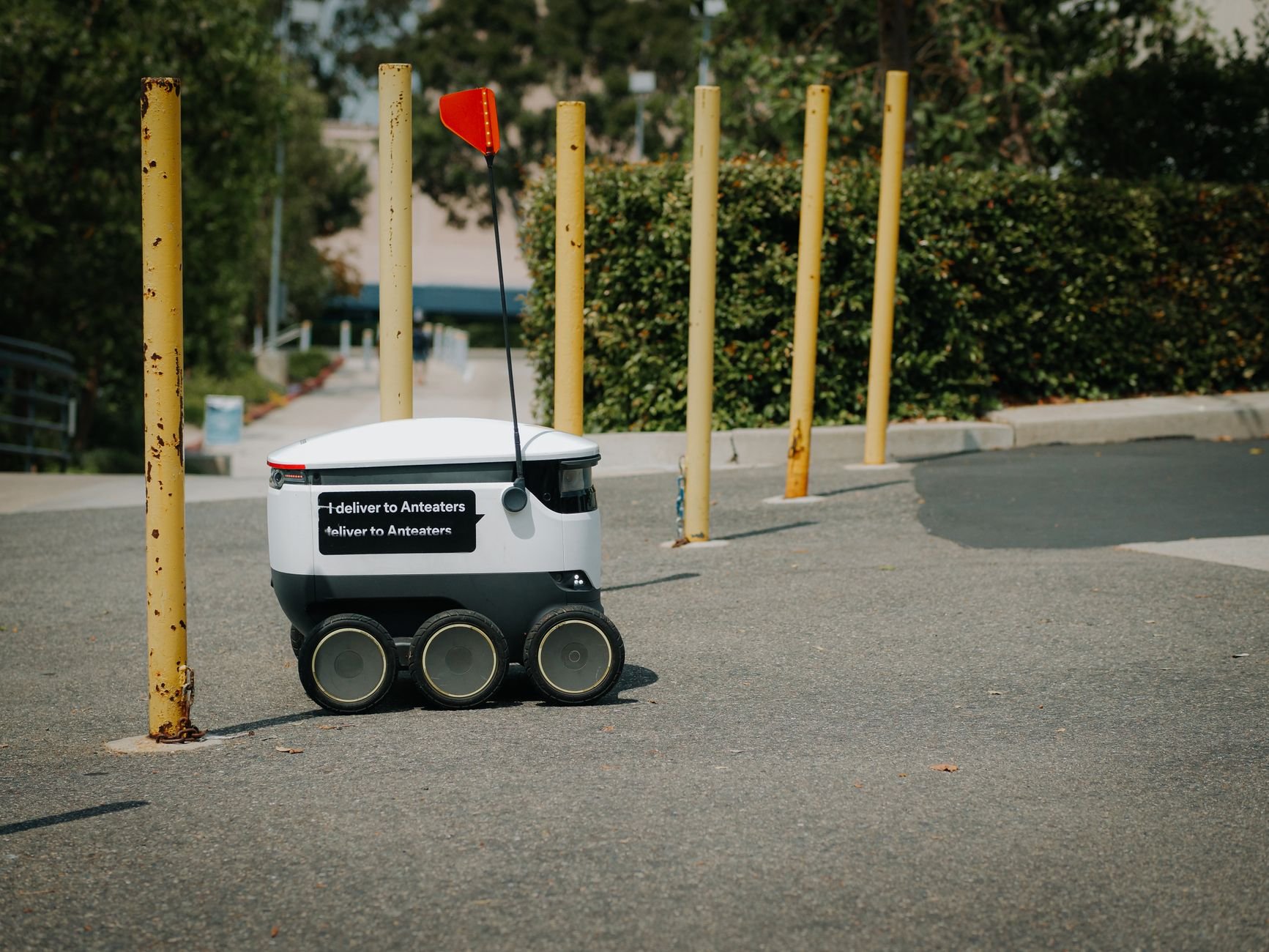
Autonomous vehicles depend on LiDAR, radar and cameras for real-time data about their surroundings. They use it to predict what other road users will do and to determine the proper routes to drive. Smaller wheeled robots meet a similar problem on paths with fixed obstacles.
Drones, tracked vehicles and spacecraft
The Caltech team demonstrated its algorithm in three completely different experimental settings: a drone, a tracked ground vehicle and a tethered spacecraft. In the drone test, a quadrotor observed four hovering white balls while avoiding four orange balls, with thermals present. In the ground vehicle test, the algorithm augmented a human driver rather than replacing one.
What makes a robot decision unsafe
A robot decision becomes unsafe when the situation falls outside what the decision method was built or tested for. The most direct form is the one noted earlier: inflexible programming meeting an unforeseen circumstance. The PMC survey also lists the unexpected repercussions of autonomous decision-making as a key concern.
- Disturbances the plan did not expect. The drone experiment included thermals, a reminder that the physical world pushes back while the robot is deciding.
- Opaque choices in high-stakes work. The same survey stresses that trust in decision-making algorithms is crucial in applications such as driverless automobiles. A choice nobody can explain is hard to trust.
- Genuine value conflicts. Automate observes that self-driving cars would have to decide whether to protect their occupants or anyone outside the vehicle. No sensor fixes that; it is a question of what the score should reward.
The survey’s remedy is procedural: AI improves safety through thorough testing, validation and verification. Rule-based systems are easiest to verify, learned systems need the most testing, and a human in the loop, as in the tracked vehicle example, adds a further check.
Frequently asked questions
How quickly can a robot run a full decision search?
Speed depends on the method. Caltech reports that its SETS algorithm can run an entire tree search in about a tenth of a second.
Does a designer have to program every possible movement?
Not necessarily. The Caltech researchers describe avoiding hand-designed motion sets, because you do not want a designer to handcraft these motions.
Can one decision method work on different robots?
Sometimes. Caltech says a key feature of SETS is that it can be applied to essentially any robotic platform.
How does reinforcement learning fit in?
Reinforcement learning is a trial-and-error method. The robot tries various options and is encouraged or discouraged along the way, so its choices improve without every rule being written by hand.