| Criterion | AMR | AGV | Planning use |
|---|---|---|---|
| Guidance | SLAM-based navigation with sensors, 3D cameras and digital maps | Floor markings, magnetic wires, QR codes or optical lines | Decide whether you accept a physical path on the floor. |
| Route flexibility | Builds a map and reroutes around obstacles | Follows predefined, fixed routes | Layouts that change favour the AMR; stable lanes suit the AGV. |
| Infrastructure | Almost none | Elevated: ground markings and cabling | Budget floor work only for the AGV. |
| Typical deployment time | A few hours to days | Several weeks to months | Use as a planning range, not a quote. |
| Payload | Up to 1.5 t for most models | Can reach several tons | Check load weight before anything else. |
| Safety approach | Integrated sensing that detects people and obstacles and responds actively | Basic protection, often reliant on external safety equipment | Weigh this where people share the aisle. |
Figures compare KUKA’s AGV vs AMR guide with Sitaci’s mobile robot guide; deployment times and payloads are Sitaci’s typical figures.
AMR vs AGV comes down to how the vehicle finds its way: AGVs follow a fixed, infrastructure-guided route, while AMRs map their surroundings and reroute. Choose an AMR for changing layouts; choose an AGV for stable lanes and heavy loads.
This comparison sits within our wider coverage of indoor autonomous robots. The sections below work through the situations that usually decide the choice.
What separates an AMR from an AGV
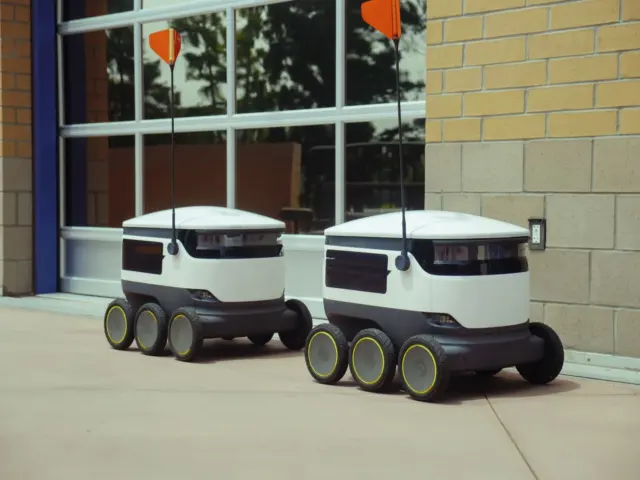
An AGV (automated guided vehicle) follows predefined routes, typically guided by floor markings, magnetic wires, QR codes or optical lines, according to KUKA. The same source describes an AMR (autonomous mobile robot) as a self-driving system that moves materials or goods in industrial and commercial environments without human intervention.
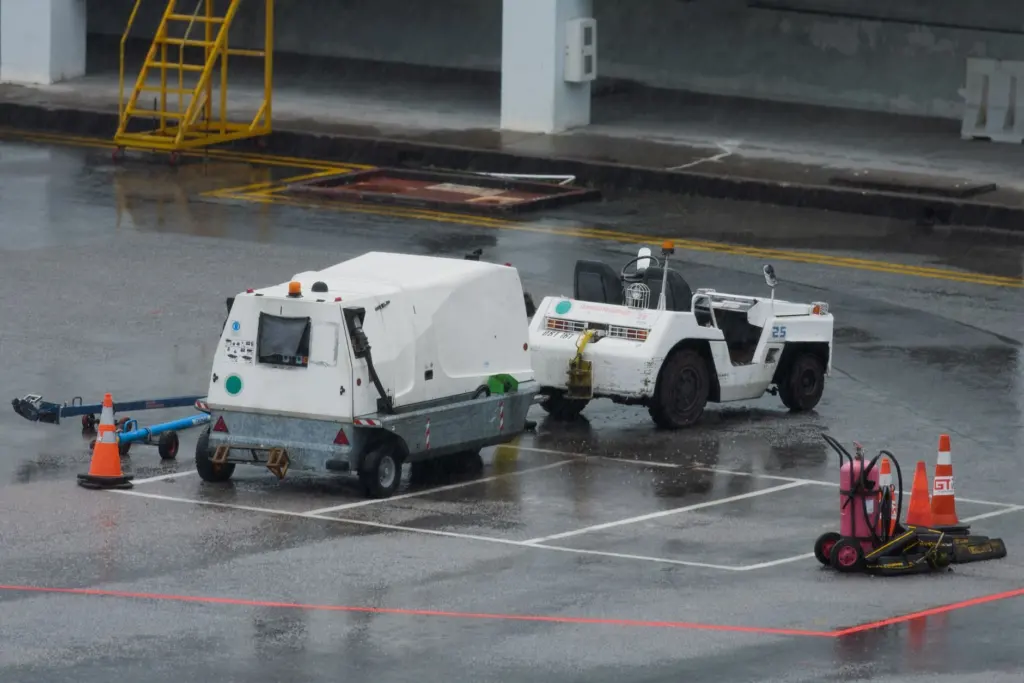
The practical difference is where the route lives. With an AGV the route is part of the building: tape, wire, reflectors or marked lanes. With an AMR the route is computed from a map, which is why Pick the Robot summarises the core difference as AMRs building and following a map and rerouting, while AGVs stick to fixed paths.
That one difference drives almost every other row in the table above. The next section looks at how each approach works in practice.

How each one navigates
AGV guidance methods
AGV guidance falls into a few families, and the choice shapes how much maintenance the system needs later.
- Magnetic tape guidance and wires. Sitaci lists magnetic strips and cables embedded in the ground as physical lines an AGV follows. KUKA notes that physical guidance such as tape or wires increases complexity and maintenance effort.
- QR codes and optical lines. These are the other floor-based references named by KUKA. They keep the route fixed in the same way tape does.
- Laser-guided navigation. Sitaci describes virtual paths defined by laser reflectors. The route is no longer a line on the floor, but reflectors still have to be installed and the path remains predefined.
- LiDAR and natural features. BALYO describes modern AGVs that use LiDAR and natural feature navigation instead of tape, wires, reflectors or QR codes. For these vehicles the line between AGV and AMR is thinner than the labels suggest, so check how a specific product navigates rather than relying on its category name.
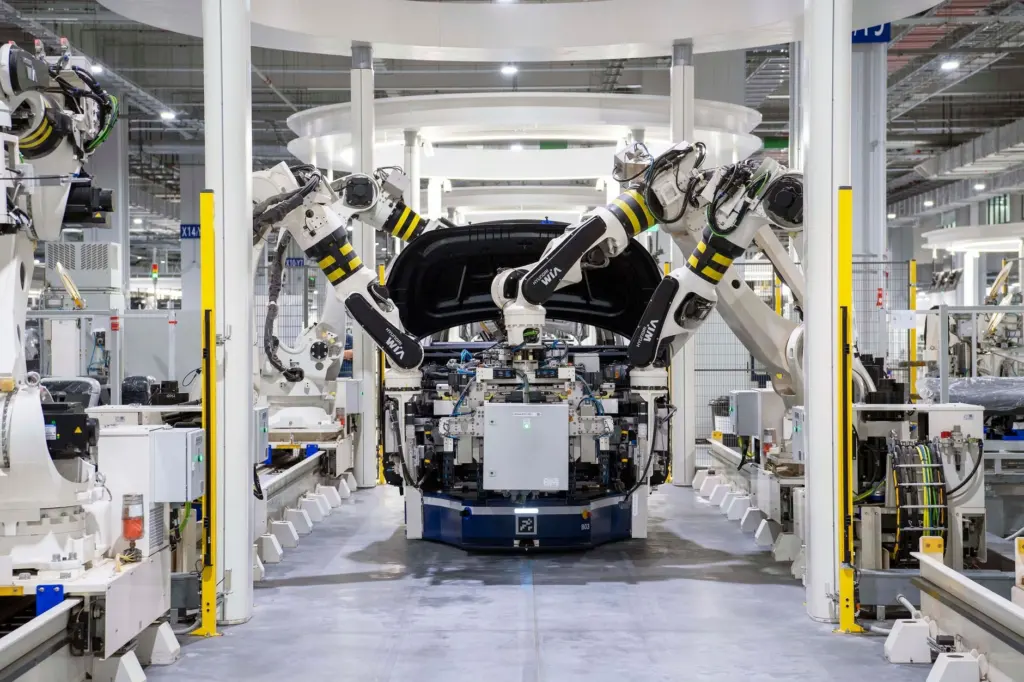
Fixed guidance has a natural home in automated factory flows such as automotive assembly, where KUKA says AGVs are commonly used.
AMR mapping and localisation
KUKA states that AMRs navigate dynamically using advanced sensors, 3D cameras and digital maps, and that they rely on SLAM navigation and precise positioning. Sitaci adds the expansion: SLAM is Simultaneous Localization and Mapping, and AMRs use it with LiDAR, 3D cameras or safety scanners to map their environment. Because the map is the route, moving a pick zone means updating software rather than touching the floor. For a deeper look at one localisation technique robots use, see what is visual inertial odometry.
When the layout keeps changing
An AMR is the stronger choice when racks, pick zones or traffic patterns move. Sitaci describes AMR deployment as radically simpler and faster than AGV deployment, and KUKA lists lower infrastructure costs and minimal physical maintenance among the AMR advantages. Pick the Robot adds that AMRs often pilot faster in existing warehouses, which matters if you want proof before committing.
The trade-offs are worth weighing before you commit:
- Price is no longer the barrier. KUKA says AMRs are now comparable in price to AGVs thanks to technological advances. That is a vendor statement, so compare quotes for your own scope.
- Rerouting cuts both ways. BALYO, a vendor of guided vehicles, cautions that rerouting can lead to less predictable travel times and traffic patterns in busy facilities. If cycle-time consistency matters more than flexibility, that argues for fixed lanes.
- Existing buildings are easier. With no tape, wire or reflectors to install, an AMR can be trialled in a working site without closing aisles for floor work.
When an AGV is still the better choice
An AGV remains the better choice for heavy loads, tight racking and layouts that rarely change. KUKA notes AGVs are commonly used in automotive assembly lines and warehouses with predictable layouts, where a fixed route is a feature rather than a limitation.
Heavy pallets
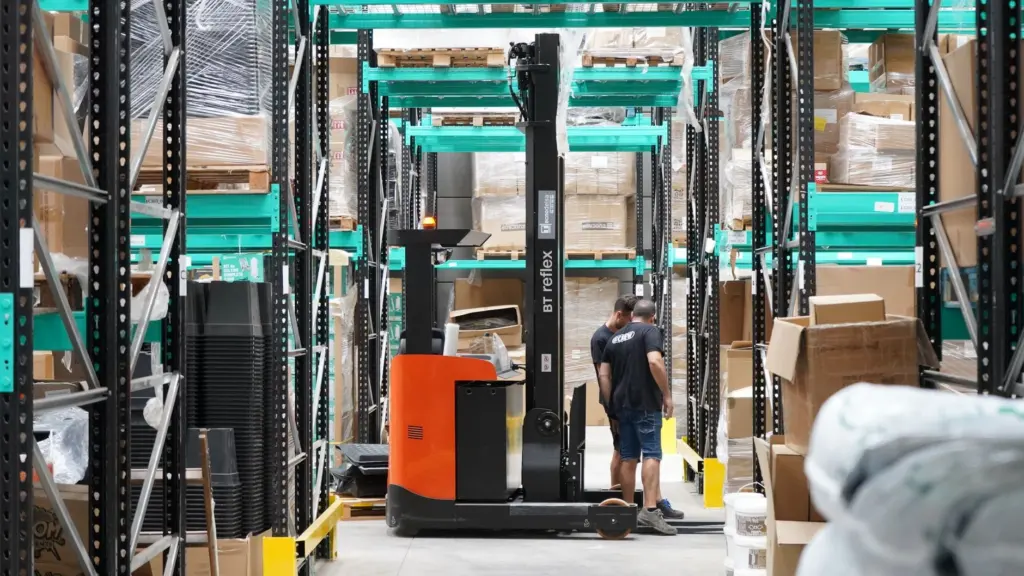
Sitaci puts AMR payload at up to 1.5 t for most models on the market and says AGV payload can reach several tons. BALYO goes further, stating that the vast majority of AMRs are not built to handle the weight and size of a fully loaded pallet. If your loads are full pallets, start the shortlist with AGVs.
High-density racking
BALYO also describes AGVs as often the only automated solution capable of navigating the tight spaces that high-density racking requires. This is a manufacturer’s view, so test it against the aisle widths and lift heights of your own site.
Stable, high-volume lanes
Where the same route runs all day, the AGV’s predictability is worth more than an AMR’s flexibility. Pick the Robot notes that many sites run AGVs on stable high-volume lanes and AMRs in dynamic pick or transport zones, so the choice does not have to be all or nothing.
Cost and deployment time
The per-vehicle price can mislead. Pick the Robot observes that an AGV can look cheaper per vehicle, but fixed guides and facility work often raise the total project cost. Sitaci’s description of AGV infrastructure cost as elevated, because of ground markings and cabling, points the same way.
Timelines follow the same logic. BALYO says an AGV built on a standard OEM forklift can have its robotic parts integrated over a couple of weeks, so the vehicle itself is not necessarily the slow part. Pick the Robot notes that AGVs need path design and infrastructure planning, which makes that planning the likelier source of delay. Ask any supplier to separate vehicle delivery from site preparation in the schedule, and compare the AGV and AMR totals on that basis.
Safety and standards
The two vehicle types differ in how protection is delivered. KUKA describes AMRs as having integrated safety mechanisms that detect people and obstacles and actively respond to them, while AGVs offer basic protection that often relies on external safety equipment. Sitaci gives the same picture: AGVs carry basic safety scanners that tell them to stop when an obstacle is detected, whereas an AMR’s 360-degree sensors and onboard intelligence let it detect a person and anticipate their trajectory.
Where people walk through the work area, the AMR’s active response is the capability to weigh most heavily. On lanes that can be kept clear of pedestrians, stop-on-detection scanners may be adequate. Which safety standards apply depends on the specific vehicle and the site, so ask the manufacturer which standards the exact model is certified to before you finalise a design.
Frequently asked questions
Can a site run AGVs and AMRs together?
Yes. Pick the Robot reports that many sites run AGVs on stable high-volume lanes and AMRs in dynamic pick or transport zones.
What does SLAM stand for?
SLAM stands for Simultaneous Localization and Mapping, the technique AMRs use to map their environment while tracking their own position, as Sitaci describes.
Can AGV routes be changed after installation?
BALYO states that its AGV routes can be modified in software whenever operational needs change. Systems that rely on tape or wires involve physical guidance, which KUKA says adds complexity and maintenance effort.
Is an AMR always the more modern choice?
No. Modern AGVs can use LiDAR and natural feature navigation, and AGVs remain the stronger fit for heavy pallets and predictable layouts. Match the vehicle to the load, layout and traffic rather than the label.