
For lidar vs camera for robot navigation indoors, choose lidar when reliable distance measurement matters most, a camera when cost or object recognition matters, and both when the robot must keep working through darkness, glare or glass.
A robot that moves from a dim freezer aisle into a bright office atrium shows the problem. Light levels in those places can range from below 5 lux to above 100,000 lux, according to MultiSet’s analysis of lidar and vision fusion. Few sensors cope equally well across that spread. The choice below applies to any of the indoor autonomous robots that must map a space and avoid obstacles in it.
Criteria that decide the choice
Work through these checks in order, because each one narrows the field before cost enters the discussion.
- Distance or meaning. Decide whether the robot mainly needs to know how far away obstacles are, or what they are. Lidar leads on geometry and cameras lead on context.
- Lighting range. List the darkest and brightest places on the route, including windows and entrances.
- Surfaces on the route. Note glass, polished metal and blank painted walls, since each defeats a different sensor.
- Budget and onboard compute. Decide how much money and processing power the sensing stack can take.
- Tolerance for dropouts. Decide whether the robot may lose its position when one sensor degrades. If it may not, plan for both sensors.
The table below applies those checks to lidar and cameras side by side.
Lidar and camera compared
| Criterion | Lidar | Camera | Planning use |
|---|---|---|---|
| Depth data | Better raw depth data | Depth estimated indirectly through stereo vision, structure-from-motion or learned monocular depth | Pick lidar when obstacle distance is the main safety input. |
| Lighting | Generates its own light, so it works in a pitch-black room or bright light | Passive sensor that depends on ambient light | Dim or highly variable lighting favours lidar or a fused setup. |
| Cost per sensor | $1,000 to $10,000 depending on type | $10 to $100 per sensor | Cameras suit tight budgets and multi-sensor layouts. |
| Data and compute | Small point cloud | Large video streams, with powerful neural nets needed for semantic understanding | Camera-heavy robots need more onboard processing. |
| Meaning of the data | Geometrically rich but semantically poor | Context and colour | Choose a camera if the robot must recognise objects or people. |
| Typical failure cases | Glass and polished metal; fog and rain scatter lasers | Darkness; limited depth perception compared with lidar | Match the sensor to the surfaces and lighting on the route. |
The figures come from Arcadian’s cameras versus lidar comparison and nferent’s robot sensor guide.
Lidar: strengths and limits
Lidar gives a robot direct distance measurements to walls and obstacles, which is why it remains the default for reliable obstacle avoidance. A point cloud is small to store and process compared with video.
- Range headroom. Lidar used for large-scale mapping reaches hundreds of meters to kilometers, according to a time-of-flight sensor vendor. That is a ceiling for mapping hardware, not a target for a room-scale robot, so an indoor buyer should check the range and field of view on the specific model’s datasheet.
- Accuracy. Commercial scanners are reported to reach ±2 cm after post-filtering, as MultiSet notes. That figure describes mapping scanners, so it should not be assumed for every low-cost unit.
- No built-in meaning. Point clouds are geometrically rich but semantically poor, so lidar alone cannot tell a person from a pillar.
- Surface and weather weaknesses. Glass and polished metal cause trouble, and fog and rain scatter the lasers.
Lidar suits robots whose job is moving safely through a mapped space. It is a weaker fit when the robot must understand what it sees.
Camera-based navigation
Monocular cameras
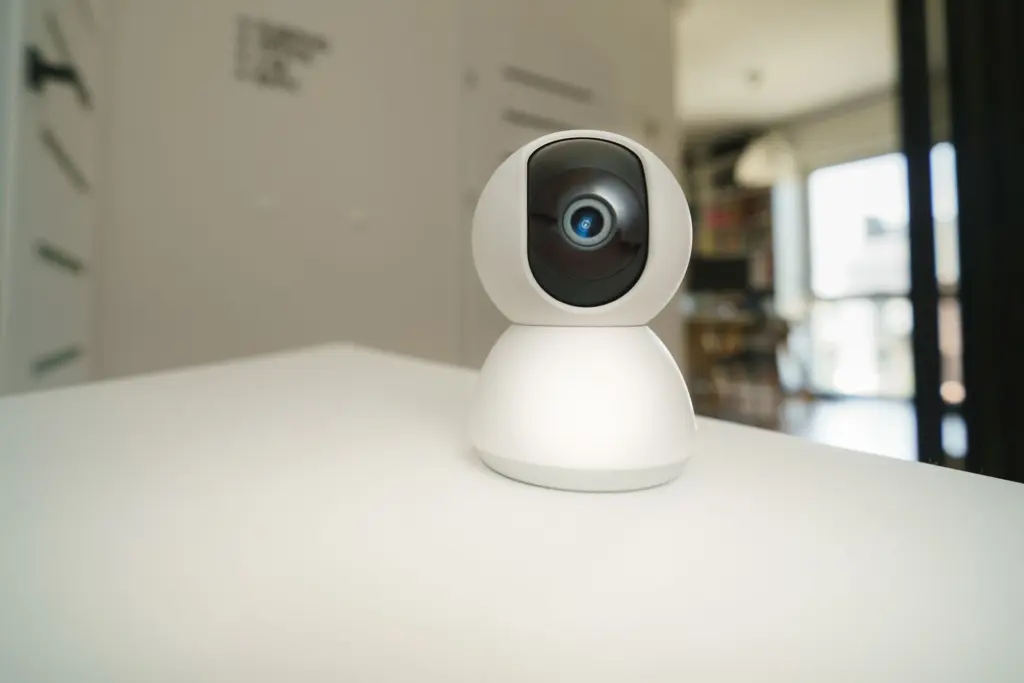
A monocular camera is cheap, lightweight and easy to integrate into almost any robotic platform, as nferent explains. The trade-off is that depth must be inferred, using stereo vision, structure-from-motion or learned monocular depth estimation. Semantic understanding from the images needs powerful neural nets, which raises the compute budget.
Depth cameras
A depth camera sits between the two approaches by measuring distance per pixel. A time-of-flight vendor, TOF Sensors, describes typical time-of-flight sensing as short range, from 0.1 m to 10 m, with accuracy in the millimeter range. The same vendor says such sensors work in nighttime, strong sunlight, rain or fog. That is a vendor claim, so confirm the lighting limits on the datasheet of the exact product before relying on it.
Can a robot navigate with only a camera?
Yes, a robot can navigate with only a camera, but it accepts compromises. Camera-only vision has limited depth perception compared with lidar. A camera also cannot see in the dark, and it struggles against a blank painted wall, according to MultiSet. Camera-only suits well-lit, feature-rich spaces where cost and weight matter most. For how mapping works in practice, see visual slam for indoor robots.
Lighting conditions and tricky surfaces
Lighting affects the two sensors in opposite ways. Lidar generates its own light source, so it does not care whether the room is pitch black or brightly lit. Cameras are fundamentally passive and depend on ambient light, as nferent states.
Surfaces matter as much as light. The same source notes that lidar can struggle with reflective or transparent surfaces such as glass and polished metal. A camera copes with a lobby of glass doors only if there is enough light and visual texture, and it has a different weakness in blank painted corridors. Routes that combine glass, dim storerooms and plain walls expose the blind spots of both sensors.

Cost, size and compute load
Cameras cost far less. Lidar has historically been more expensive than cameras, per nferent.
Size and processing shift the balance further. Cameras are small and light, and MultiSet notes the hardware adds almost nothing where cameras are already on site. Lidar costs more per unit but produces small point clouds, while cameras produce large video streams that need heavy processing to extract meaning. A cheap camera can therefore need an expensive computer.
When a robot should use both
Use both sensors when losing position is costly or the route mixes lighting, glass and plain walls. nferent describes lidar and cameras as complements, because each covers the other’s blind spot. When one sensor’s data is degraded by darkness or glare, the other keeps the robot working.
MultiSet makes the same point differently: fusion is not about accuracy, it is about failure decorrelation, so a fused system keeps its pose when one sensor fails. The cost is engineering effort. Fusion requires careful sensor calibration, precise timestamp alignment and rigorous quality control. A robot team without time for that work should pick the single sensor that best fits the route.
Recommendation by use case
- Dim or variable lighting, such as storerooms and cold aisles. Choose lidar first, since it supplies its own light.
- Well-lit, textured spaces on a tight budget. A camera with visual SLAM is the cheaper path, provided the onboard computer can handle the video load.
- Tasks that depend on recognising objects or people. Add a camera, because lidar data lacks semantic meaning.
- Lobbies with glass doors and polished metal. Use both sensors, since lidar struggles with those surfaces.
- Short-range depth on a small platform. A depth camera is worth shortlisting, with its datasheet limits checked against the route.
For a wider survey of the hardware beyond these two, see sensors used in indoor autonomous robots.
Frequently asked questions
| Question | Answer |
|---|---|
| Is a depth camera the same as lidar? | No. A depth camera of the time-of-flight type typically senses from 0.1 m to 10 m, while lidar built for large-scale mapping reaches hundreds of meters to kilometers, according to TOF Sensors. |
| Do visual SLAM and lidar SLAM give an absolute position? | No. MultiSet says both are relative to wherever the device powered on, so a separate reference is needed for a position fixed to the building. |
| Can a camera work without room lighting? | A camera needs light unless thermal infrared is used, according to the same Arcadian comparison. A standard camera in a dark room is not a reliable choice. |