
| Situation | Effect on the robot | Planning use |
|---|---|---|
| Robot is carried elsewhere, displaced or switched off and moved | It loses knowledge of its pose and must re-estimate its location without prior initialization | Treat start-up and post-move states as global localization, not as a continuation of the last pose |
| Satellite positioning is weak near tall buildings and often poor indoors | GPS cannot supply a fresh position fix inside a building | Rely on onboard sensing and the stored map for recovery |
| Several candidate positions remain plausible | A Monte Carlo localization filter keeps multiple pose hypotheses and updates them as sensor data arrives | Choose a method that tolerates ambiguity and lets wrong guesses die out |
| Robot needs a starting region for its search | Place recognition narrows the area from coarse structure to finer detail | Pair place recognition with a probabilistic filter to speed up recovery |
Effects and approaches above are summarised from reporting on researchers studying kidnapped robots and coverage of a Spanish localization study.
The kidnapped robot problem is a robot losing track of its pose after being moved, powered off or displaced, so it must re-estimate where it is without prior initialization. Global localization and place recognition are the usual routes back.
The problem matters most for indoor autonomous robots, where nobody can fall back on a satellite fix. The sections below start with what goes wrong in real buildings, then cover how a robot notices it is lost and how it recovers.
Where lost localization comes from
Reporting on the research describes losing track of position as a long-standing challenge known as the kidnapped robot problem. The classic case is literal: someone lifts the robot and sets it down somewhere else. In practice the trigger is broader, because a robot can lose knowledge of its pose after being powered off, displaced or physically moved.
That breadth changes how a deployment should be planned. A robot does not need a dramatic event to become lost. A staff member pushing it out of a doorway, a restart after a fault, or a robot carried to a different floor all leave the robot holding a pose that no longer matches reality.
Why a building makes it harder
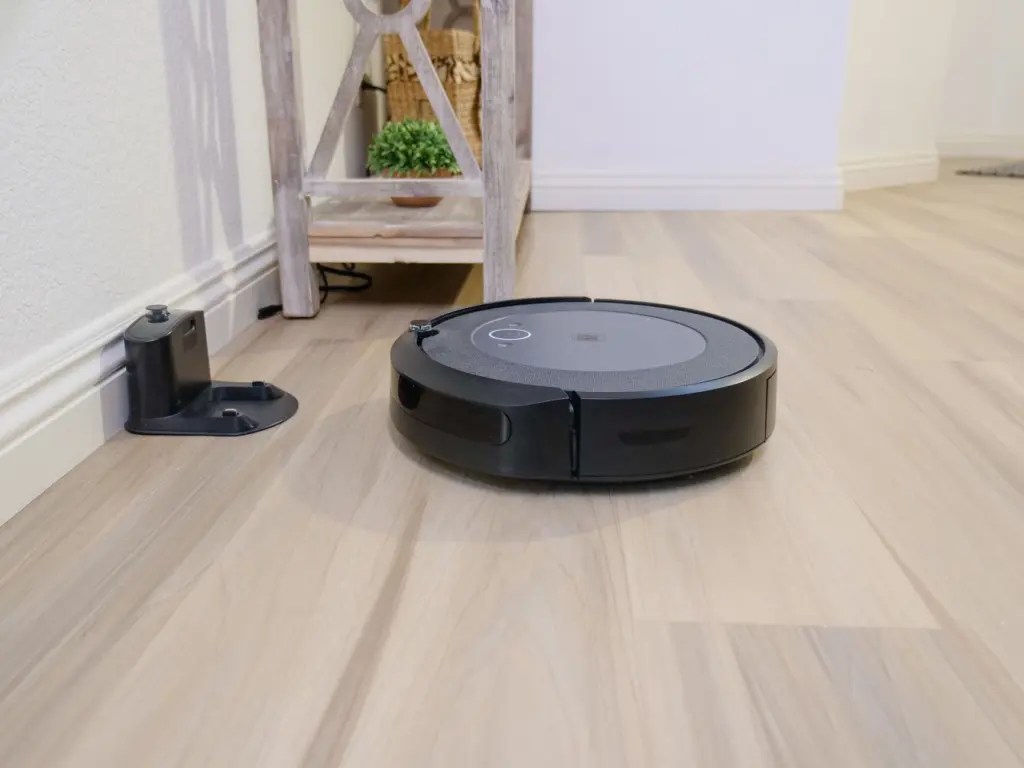
Outdoors, a robot can lean on satellite positioning. Those signals can become weak near tall buildings and often do not work well indoors. Inside a building the robot therefore has to recover from its own sensors and a stored map. Buildings with look-alike corridors add a second difficulty, because more than one location can explain what the sensors currently report. That ambiguity is the main reason recovery methods keep several guesses alive instead of committing to one early.
Detecting that the robot is lost
A robot cannot always tell directly that it has been kidnapped. If it stays powered on, the practical warning sign is disagreement between what its sensors report and what its map predicts at the believed pose. That is general engineering logic rather than a specific threshold, and the exact trigger depends on the localization stack in use.
If the robot was powered off and moved, there is nothing to detect. It wakes up without a trustworthy pose, and the only sensible treatment is to start global localization immediately. Both situations end in the same requirement: the robot must re-estimate its location without relying on prior initialization.
Decisions that follow from this
- Do not trust the last saved pose after a restart. A robot that may have been moved while off should begin from a broad hypothesis, not from where it last stopped.
- Separate a drifting estimate from a lost one. Small errors suit normal tracking and map matching. A complete mismatch calls for relocalization from scratch.
- Plan for people. In shared buildings, handling, carrying and pushing happen, so recovery is a routine behavior, not an exception.
Recovery by spreading and narrowing particles
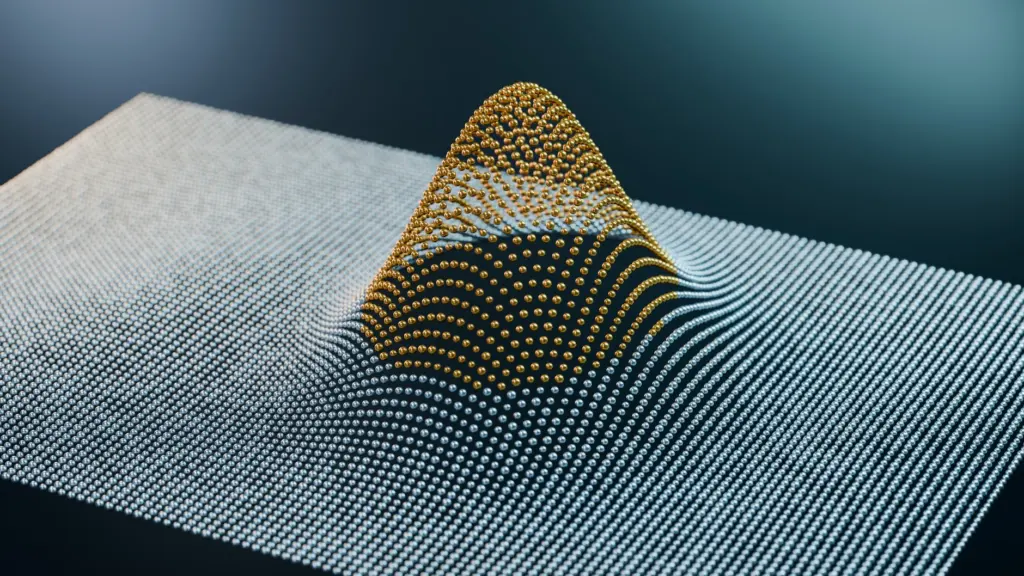
Monte Carlo localization answers the lost-robot case by maintaining several possible location estimates at once and continuously updating them as new sensor data arrives. A particle filter implements this idea: each particle is one guess about the pose, and guesses that fit the incoming sensor data are kept while the rest fade.
For global localization, the particles are spread across the free space of the map rather than clustered near the last pose. As the robot senses its surroundings, implausible positions lose weight and the cloud narrows. When the guesses agree, the robot has relocalized.
What spreading does well and where it struggles
- It handles ambiguity. Because several hypotheses coexist, a wrong early guess can be outweighed when later sensor data contradicts it.
- It works from no starting pose. That fits the kidnapped case, where any prior pose is unreliable.
- It needs informative sensing. If the robot sees only a featureless stretch of wall, many particles stay equally plausible. Moving to gather new views helps, which is why recovery behaviors that make the robot move or turn to collect more data are common in navigation stacks.
Ordinary tracking assumes the pose is roughly known. Recovery is a different mode, and a deployment should switch to it deliberately rather than hope the tracking filter drifts back on its own.
Place recognition as a shortcut to relocalization
Place recognition lets a robot ask where it is by comparing current sensor data with stored views of the environment. In the work described by the reporting, the approach is coarse to fine. The system first identifies a general area by recognising large structures, then works with smaller details. That order suits a lost robot, since it avoids searching the whole map at full resolution.
Methods for relocalization
Coverage of a Spanish study describes a version built on 3D LiDAR. The robot identifies its approximate region using global structural features extracted from 3D LiDAR point clouds. The learned features are then fused with probabilistic Monte Carlo Localization, which maintains and updates multiple pose hypotheses. The method, called MCL-DLF, was published in the International Journal of Intelligent Systems.
The coverage reports that long-term deployment tests showed MCL-DLF achieved higher positional accuracy than conventional localization methods. That is a result for one method in the tests described. It does not show that learned place recognition beats a plain particle filter in every building.
How the two ideas fit together
Place recognition supplies a candidate region, and the particle filter supplies the statistical bookkeeping. Seeding particles near a recognized place can shorten recovery compared with spreading them over the whole map. The filter still checks the guess against live data, so a mistaken match gets corrected instead of trusted blindly. A related technique, covered in what is loop closure in slam, also relies on recognizing places already visited, though it serves map building rather than recovery from a kidnapping.
Choices for a building deployment
The right recovery design depends on how often robots are moved and how distinctive the building is. These are judgement calls drawn from the mechanisms above, not fixed rules.
- Quiet buildings with distinctive structure. Place recognition, with a coarse region first, can narrow the search quickly and suits spaces where large structures differ from area to area.
- Repetitive layouts. Keep multiple hypotheses and allow time or movement for data to separate them, since a single early guess is risky.
- Frequent handling by people. Make relocalization a normal state with a clear trigger, so the robot does not carry on with a stale pose.
- Many robots. A lost robot is also an operational event. A robot fleet management software layer can flag a robot that has stopped trusting its pose and hold its tasks until it recovers.
Frequently asked questions
Is GPS enough to recover a lost indoor robot?
No. Satellite signals can weaken near tall buildings and often work poorly indoors, so recovery has to rely on the robot’s own sensors and map.
Does global localization need a starting pose?
No. Global localization exists for the case where the robot has no usable prior pose, so it begins with guesses spread across the map and narrows them with sensor data.
Does place recognition replace the particle filter?
Not in the approach described in the reporting. Place recognition proposes a region, and the Monte Carlo filter keeps and updates the pose hypotheses, which together gave higher positional accuracy than conventional methods in the long-term tests reported.
Why does powering a robot off count as a kidnapping?
If the robot is moved while off, it wakes up with no reliable knowledge of its pose. From the robot’s perspective that is the same as being lifted and placed elsewhere.